Skip to content

If you’ve started looking into commercial cleaning in Liverpool, you’ll have noticed most providers say roughly the same thing: fully insured, experienced, flexible scheduling, free quote. That makes it hard to tell who’s actually right for your building.
The truth is that “commercial cleaning” isn’t one service. A busy dental practice, a primary school, and a marketing agency’s office all need very different things from a cleaning contract — different hours, different compliance checks, different levels of attention to detail in different rooms. This guide walks through what commercial cleaning covers, what changes depending on the kind of organisation you run, and what to check before you sign anything.
What “Commercial Cleaning” Actually Covers in Liverpool
“Commercial cleaning” is the umbrella term for cleaning carried out in workplaces and non-residential buildings, as opposed to private homes. In practice, it splits into a few distinct types of work.
Office and workplace cleaning
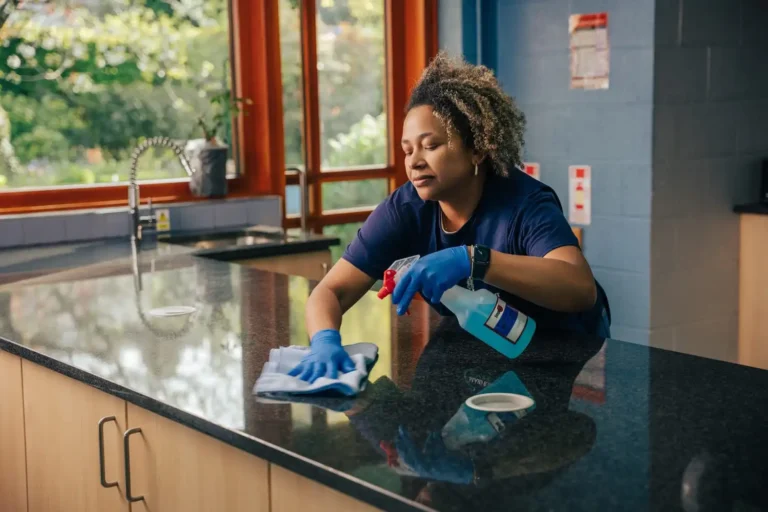
This is the day-to-day maintenance most businesses think of first: desks, kitchens, washrooms, communal areas, floors and bins, usually on a recurring schedule (daily, a few times a week, or weekly) outside business hours so it doesn’t disrupt staff.
Contract cleaning vs. one-off and deep cleans
Contract cleaning is an ongoing arrangement, typically set out in a service level agreement (SLA) that fixes the scope, frequency and standards expected. One-off or deep cleans are separate jobs — end-of-tenancy cleans, post-construction “builders cleans,” or periodic deep cleans that go beyond routine maintenance (behind appliances, inside vents, deep carpet extraction). Many Liverpool businesses use both: a contract for routine upkeep, plus occasional deep cleans.
Specialist services
Beyond general cleaning, most commercial providers also offer carpet and upholstery cleaning, washroom hygiene services, and after-builders cleaning. Worth checking whether these are included in a standard contract or billed separately, since it affects how you compare quotes.
Why Requirements Differ by Buyer Type
The biggest gap in most “commercial cleaning” content — and the biggest source of a mismatched contract — is treating every commercial client the same. In reality, priorities shift a lot depending on what kind of organisation is buying.
Offices and general businesses
For most offices, retail units and hospitality venues, the priorities are consistency, presentation, and minimal disruption. You want a team that turns up reliably, keeps to a checklist, and can flex around events, deliveries or unusually busy weeks.
Schools and educational settings
Schools have everything offices have, plus safeguarding obligations. Cleaning staff are often on site during or just after the school day, sometimes in spaces children use directly. That means staff vetting (DBS checks) isn’t optional, and cleaning needs to work around the school calendar — routine cleaning in term time, more intensive deep cleans over half-terms and the summer holidays, and particular attention to high-touch areas like toilets, canteens and PE changing rooms.
GP surgeries and dental practices
Healthcare settings carry the highest bar. Cleaning has to support infection control, not just tidiness — correct handling and dilution of cleaning chemicals (COSHH awareness), colour-coded equipment to avoid cross-contamination between clinical and non-clinical areas, and cleaning staff who understand why a waiting room, a consultation room and a clinical area aren’t cleaned the same way. Practices registered with the Care Quality Commission (CQC) should also expect their cleaning provider to understand what “CQC-ready” cleanliness looks like on the day of an inspection, not just day-to-day.
What to Check Before You Choose a Provider
A handful of checks will tell you more about a provider than any sales pitch.
Insurance and staff vetting
Confirm public liability insurance (and ask to see the certificate, not just take it on trust), and ask directly whether cleaning staff are DBS-checked — essential for any site with children, vulnerable adults, or regular access to sensitive areas.
Safeguarding awareness for school sites
For schools, ask how the provider manages access during the school day, whether staff have safeguarding awareness training, and how holiday deep cleans are scheduled around term dates.
Infection control for healthcare sites
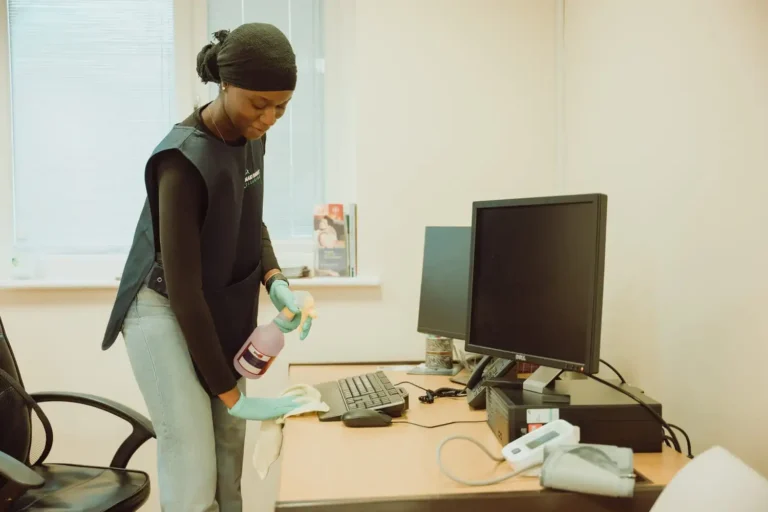
For GP surgeries and dental practices, ask how the provider separates clinical and non-clinical cleaning (equipment, products, procedures), and whether their team has experience cleaning healthcare environments specifically — it’s a different skill set from office cleaning.
Scheduling flexibility
Ask how the provider handles access outside normal hours, what happens if a scheduled clean is missed, and how much notice they need to adjust frequency (e.g. extra cleans during flu season, or reduced cleaning over a quiet holiday period).
What Drives Commercial Cleaning Costs in Liverpool
Commercial cleaning quotes vary because several factors genuinely change the amount of work involved:
| Cost driver | Why it matters |
|---|---|
| Floor area and layout | More square footage and more individual rooms/washrooms mean more time on site |
| Frequency | Daily cleaning costs more overall than two or three visits a week, but each visit is quicker to complete |
| Type of site | Clinical and food-prep areas typically cost more per hour than general office space, due to stricter standards |
| Access hours | Early-morning, evening or weekend-only access can affect pricing versus flexible daytime access |
| Specialist add-ons | Carpet cleaning, window cleaning and periodic deep cleans are usually quoted separately from routine contracts |
Because pricing depends on the specifics of your building and schedule, the most reliable way to get an accurate figure is a walk-through quote rather than a general estimate. [Internal link: full 2026 cost breakdown — see Internal Linking Recommendations below.]
Questions to Ask Before Signing a Contract
- What exactly is included in the standard visit, and what counts as an add-on?
- Are your cleaning staff DBS-checked, and can you confirm this in writing?
- What’s your process if a cleaner is off sick — is cover guaranteed?
- How do you handle site access, keys or alarm codes?
- What’s the notice period to change frequency or cancel the contract?
- Do you carry out a walk-through before quoting, or price from a form?
- For schools: how are holiday deep cleans scheduled, and is there a safeguarding policy for cleaning staff?
- For healthcare sites: how do you prevent cross-contamination between clinical and non-clinical areas?
Common Mistakes Businesses Make When Choosing a Cleaner
- Choosing on price alone. The cheapest quote often excludes things (washroom consumables, window cleaning, deep cleans) that get added back as extras later.
- Not asking about staff continuity. High cleaner turnover means inconsistent standards — worth asking how long staff typically stay on a contract.
- Skipping the site visit. A quote given without seeing the building is a guess, not a quote.
- Assuming one contract fits every site. A single-site office and a multi-site school group need different SLAs — don’t accept a generic template.
- Overlooking compliance paperwork. For schools and healthcare sites, ask for vetting and insurance documentation upfront, not after signing.
Why Liverpool Organisations Work With Maid Right Cleaning Ltd
Maid Right Cleaning Ltd provides commercial cleaning across Liverpool and the wider region — including Wirral, Birkenhead, Chester, Ormskirk and Southport — for offices, schools, GP surgeries and dental practices. Services span routine contract cleaning, one-off and deep cleans, and specialist work like commercial carpet cleaning, with staff who are insured and DBS-checked. Because requirements differ so much by sector, every quote starts with a walk-through of the site rather than a generic estimate.
If you’re ready to compare options, the commercial cleaning services in Liverpool page sets out the full range of services and coverage areas.
6. FAQ Section
How much does commercial cleaning cost in Liverpool? It depends on floor area, frequency, site type and access hours — a walk-through quote is the most accurate way to price a contract rather than a flat per-square-foot rate.
How often should a commercial building be cleaned? Most offices are cleaned daily or several times a week; schools typically need daily term-time cleaning plus more intensive holiday deep cleans; healthcare sites often need cleaning both during and after opening hours for high-touch areas.
Are commercial cleaners DBS-checked? Reputable providers DBS-check staff, which matters most for schools and healthcare sites. Always ask a provider to confirm this in writing rather than assuming it.
What’s the difference between contract cleaning and a one-off clean? Contract cleaning is an ongoing, scheduled arrangement under an SLA. A one-off clean (end-of-tenancy, after-builders, or a periodic deep clean) is a single job outside that routine schedule.
Can commercial cleaning be done outside business hours? Yes — most providers offer early-morning, evening or weekend cleaning specifically to avoid disrupting staff, students or patients.
Do cleaning companies handle clinical or healthcare areas differently? They should. Clinical areas need separate equipment and products from general areas to avoid cross-contamination, and staff should understand infection control basics, not just general cleaning.
What should a school ask a cleaning provider about safeguarding? Whether all on-site staff are DBS-checked, how access is managed during the school day, and how holiday deep cleans are scheduled around term dates.
Is carpet cleaning included in a standard commercial cleaning contract? Usually not — it’s typically quoted as a specialist add-on rather than part of routine cleaning, so it’s worth clarifying this when comparing quotes.